Why ChatGPT Recommends the Biggest Brands in Your Category
· · 8 min read
ChatGPT tends to name big brands because they accumulate far more earned media, third-party coverage, and training-data presence than smaller competitors. Size itself is not the signal. The model favors businesses it can cross-reference across many independent sources, so a small firm that builds that coverage can beat a big brand in its own niche.
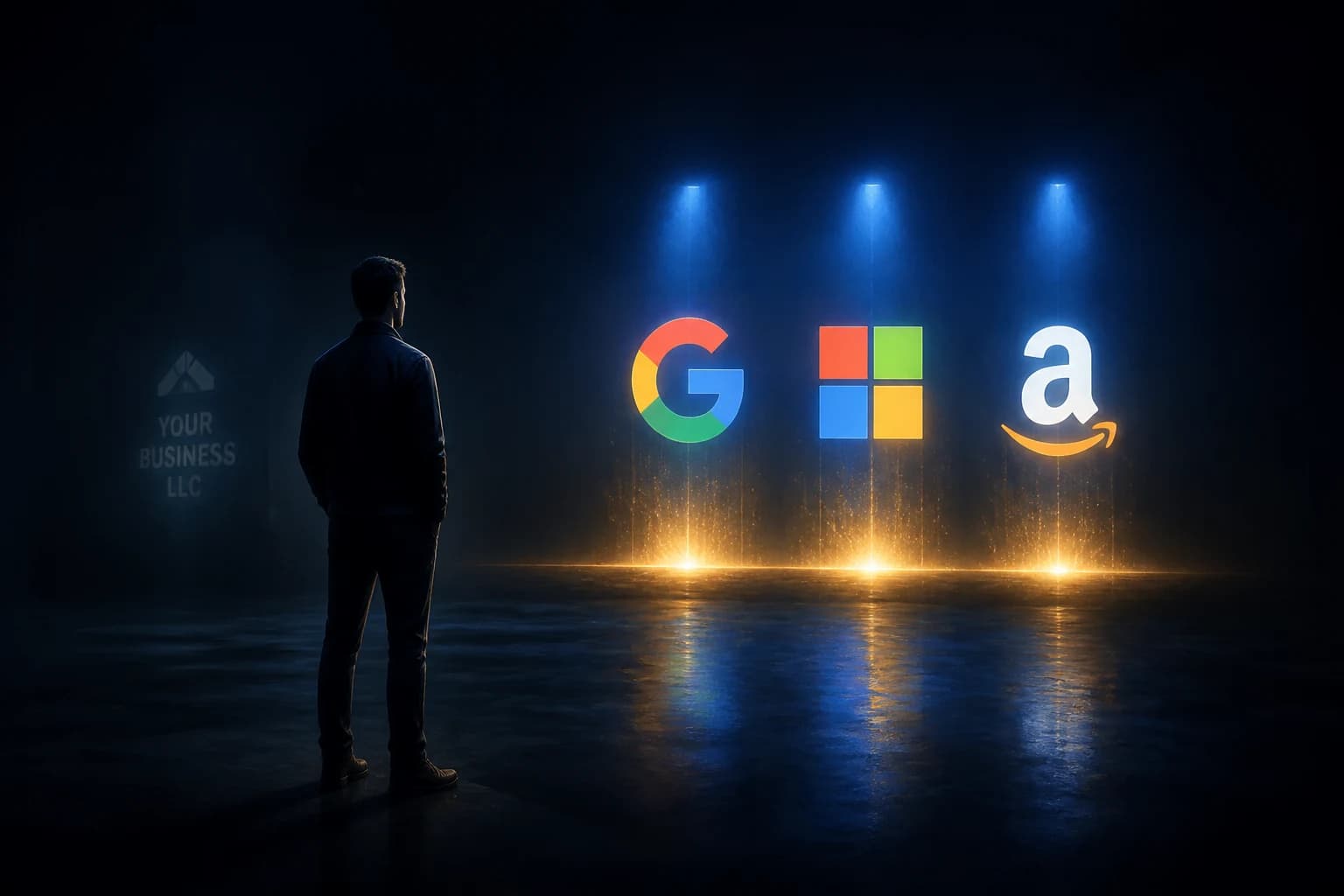
Ask ChatGPT who to hire in your category and you will usually get the same few names. The big ones. They are rarely the best option for you. So why does the model keep naming them?
Most owners assume it is because those companies have better websites. That is the wrong answer. The real reason is simpler and easier to attack: big brands own a mountain of earned media that small businesses do not.
Key Takeaways
- ChatGPT names big brands because they hold far more earned media, not because their sites are built better.
- A 2025 University of Toronto study found AI search shows a systematic bias toward earned media over brand-owned content.
- BrightEdge data shows ChatGPT mentions brands more than three times as often as it cites them.
- A small firm can flip the advantage by building third-party coverage in one tightly-scoped local niche.
TL;DR
ChatGPT appears to favor big brands for one measurable reason: they win on earned media. A 2025 University of Toronto study, published on arXiv, found AI search shows a "systematic and overwhelming bias" toward third-party, authoritative sources over brand-owned and social content. Big brands have spent years building that coverage. The bias is not about size or website quality. It is about who the model can cross-reference.
The bias is real, and researchers have a name for it
When you see ChatGPT recommend the largest player in your market, you are watching a documented effect. Researchers call it the "big brand bias."
In September 2025, a team at the University of Toronto published a large-scale analysis of generative engines. Their paper, "Generative Engine Optimization: How to Dominate AI Search," found that AI search systems show a systematic and overwhelming preference for earned media over brand-owned content and social posts. The paper names the "inherent big brand bias" as one of the core problems a niche player must overcome (arXiv, Chen et al.).
This is not a slight against any one company. It is a structural feature of how these engines select sources. They lean on what independent third parties say, not what a business says about itself.
What "earned media" actually means for an AI
Earned media is coverage you did not pay to place and did not write yourself. A trade journal naming you. A state licensing board listing you. A local news story. A review platform profile with consistent details.
This is the fuel the model burns when it decides who to name. BrightEdge's analysis of thousands of ChatGPT prompts found that the model mentions brands 3.2 times more often than it cites them. Nearly half of prompts name zero brands at all. When a name does appear, it is usually one with the most third-party coverage.
Big brands win this by volume. They have decades of press, listings, awards, and public mentions. A local specialist with a great website and no external coverage looks invisible by comparison, even when the specialist is the better hire.
Why big brands win the training-data race
There is a second, quieter force at work. The model's base knowledge comes from whatever it read during training.
Page One Power's breakdown explains that a brand appears when it was densely co-mentioned with a category across many documents in the training corpus. Big brands get co-mentioned constantly. They show up in lists, articles, and reviews every single day.
A small firm gets co-mentioned rarely, if at all. So the model simply has more raw material to pull a big name from. It is not choosing quality. It is choosing frequency.
The good news: you do not need to outspend them
Here is the part that matters for an owner of a local or niche business. You are not trying to beat Coca-Cola at global name recognition. You are trying to win one category in one place.
The big brand is spread thin. It competes for a thousand keywords across a hundred markets. You can focus every signal on one city, one specialty, and one audience. That focus is your edge.
Own a single niche conversation
Pick the one thing you want ChatGPT to name you for. Make it narrow. "Best commercial HVAC contractor in Phoenix" beats "best business." Then make sure a third party somewhere states that same thing about you.
Give the crawlers something to read
Most big brands are careless about the technical side of AI visibility. They do not need to be. You can be better. OpenAI's crawler documentation lists the bots that power ChatGPT search. Google's AI Overviews guidance explains how its summaries surface content.
Mark up your business with Schema.org Organization data so machines can read exactly what you are. The NIST guidance on managing AI system risk reinforces the same point: models are fallible, so a clean, unambiguous signal matters. A generic big brand rarely bothers to fine-tune this for your local market.
The math that should worry your competitors
Let us do a quick synthesis from cited numbers. Pew Research Center found that 44 percent of U.S. adults now use ChatGPT, and 42 percent use chatbots to search for information.
Combine that with BrightEdge's finding that mentions drive recommendations far more than links do. A buyer in your market is now more likely to ask an AI than to click a search result. If your name is not in the model's list, that buyer is gone.
The fix is not a better website. It is earned media, entity clarity, and quoted coverage in your niche. Those are the exact things a big brand ignores in your local market. That is the gap.
How to check where you stand right now
Open ChatGPT and ask it to recommend a business in your category and city. Note which names appear. Then check whether you can find those names quoted, listed, and reviewed anywhere besides their own site.
You will likely see the pattern fast. The businesses the AI names are the ones with the deepest third-party footprint, not the prettiest homepage. For the full mechanism behind how these engines pick names, read how ChatGPT picks businesses. If you rank on Google but never get named by an AI, this post explains why. Want to see if ChatGPT even knows your company exists yet, start with this check.
Want to see exactly which platforms already see your business and which do not? Reach out and we will run a citation sweep across the major AI engines and show you where you land.
Sources cited in this analysis?
- BrightEdge - ChatGPT Brand Mentions vs. Citations - mentions outpace citations 3.2x and 44 percent of prompts name no brand
- arXiv - Generative Engine Optimization (Chen et al., 2025) - systematic earned-media bias and the "big brand bias"
- Pew Research Center - Americans and AI 2026 - 44 percent of U.S. adults use ChatGPT and 42 percent search with chatbots
- Page One Power - How LLMs Choose Which Brands to Mention - co-mention density and data freshness in training data
- OpenAI - Overview of OpenAI Crawlers - crawler access required for ChatGPT search visibility
- Google Search Central - AI Overviews - how AI summaries surface and cite content
- Schema.org - Organization Type - structured data for entity recognition
Frequently Asked Questions
Is ChatGPT deliberately biased against small businesses?
No. The bias is not intentional. The same Toronto study that named the "big brand bias" found it flows from earned-media coverage, which big brands simply accumulate in higher volume. A small firm with strong third-party coverage gets cited too.
Do I need a bigger marketing budget to compete?
No. You need focus, not budget. A big brand spreads its attention across many markets, which dilutes its signal and makes it generic. You can concentrate everything on one city, one specialty, and one audience. That focused play costs far less and lands harder.
How fast can a small business start getting named?
Most practitioners see first citations appear within three to six months of consistent entity and earned-media work. There is no overnight switch, because the model updates on its own schedule. Full ownership of a niche takes longer, often a year or more of steady coverage.
Does a better website fix the problem?
Not by itself. A faster, cleaner website helps your own visitors convert, and that is still valuable on its own terms. But the model leans on what third parties say about you, not what your site claims. Earned media and entity clarity matter more than page polish for getting named by AI.
Can I buy my way into ChatGPT recommendations?
No. There is no auction, no ad slot, and no paid placement for AI brand recommendations. The only durable path is building real third-party coverage and clean entity signals over time. Anyone selling you a shortcut to instant citations is selling you a story, not a result.
Where should I start today?
Pick one narrow niche you want to own, and state your business name and category identically everywhere it appears. Then add Organization schema to your site. Pursue one piece of third-party coverage, such as a trade publication mention. Entity clarity is the foundation, so everything else builds on top of it.
Sources
- BrightEdge - ChatGPT Brand Mentions vs. Citations (accessed 2026-09-29)
- Pew Research Center - Americans and AI 2026 (accessed 2026-09-29)
- arXiv - Generative Engine Optimization (Chen et al., 2025) (accessed 2026-09-29)
- OpenAI - Overview of OpenAI Crawlers (accessed 2026-09-29)
- Google Search Central - AI Overviews (accessed 2026-09-29)
- Page One Power - How LLMs Choose Which Brands to Mention (accessed 2026-09-29)
- Schema.org - Organization Type (accessed 2026-09-29)
